INDIGO: The Coveted Natural Dye


Indigo, the magical shade of blue admired around the world, is the oldest and most widely used natural dye. Neel, the colour blue was extracted from the plant indigofera that grew in the wild, and the art of extracting colour from nature was known in India for almost 4000 years, since the time of the Indus Valley Civilisation. From Mohenjo Daro site, archaeologists have recovered seeds as well as remnants of cloth dyed in indigo blue.

This colour fast blue dye was exported along the ancient caravan route to the Mediterranean region where it commanded a high price. The dye was also known to the ancient civilisations of Mesopotamia, Egypt, Peru and Africa. Indigo extract has been used not only for dyeing yarn and fabrics, but also as an antiseptic, used as a hair dye with henna, and in paints and inks. It was a luxury item, imported to the Mediterranean from India by Arab merchants.

Indigo remained a rare commodity in Europe throughout the Middle Ages. They used a similar dye derived from the leaves of the woad plant (Isatis tinctoria), but the dye was not fast. In 1498, the Portuguese explorer Vasco da Gama discovered a sea route to India, which opened up direct trade with the subcontinent. With this, indigo reached the shores of Europe and became accessible to the average European. Arab traders had carried indigo dyed fabrics to trade centres such as Cyprus, Alexandria and Baghdad, from where they were resold to Italian merchants who brought them to Europe. The length and danger of the journey and profits by multiple middlemen made indigo extremely expensive.


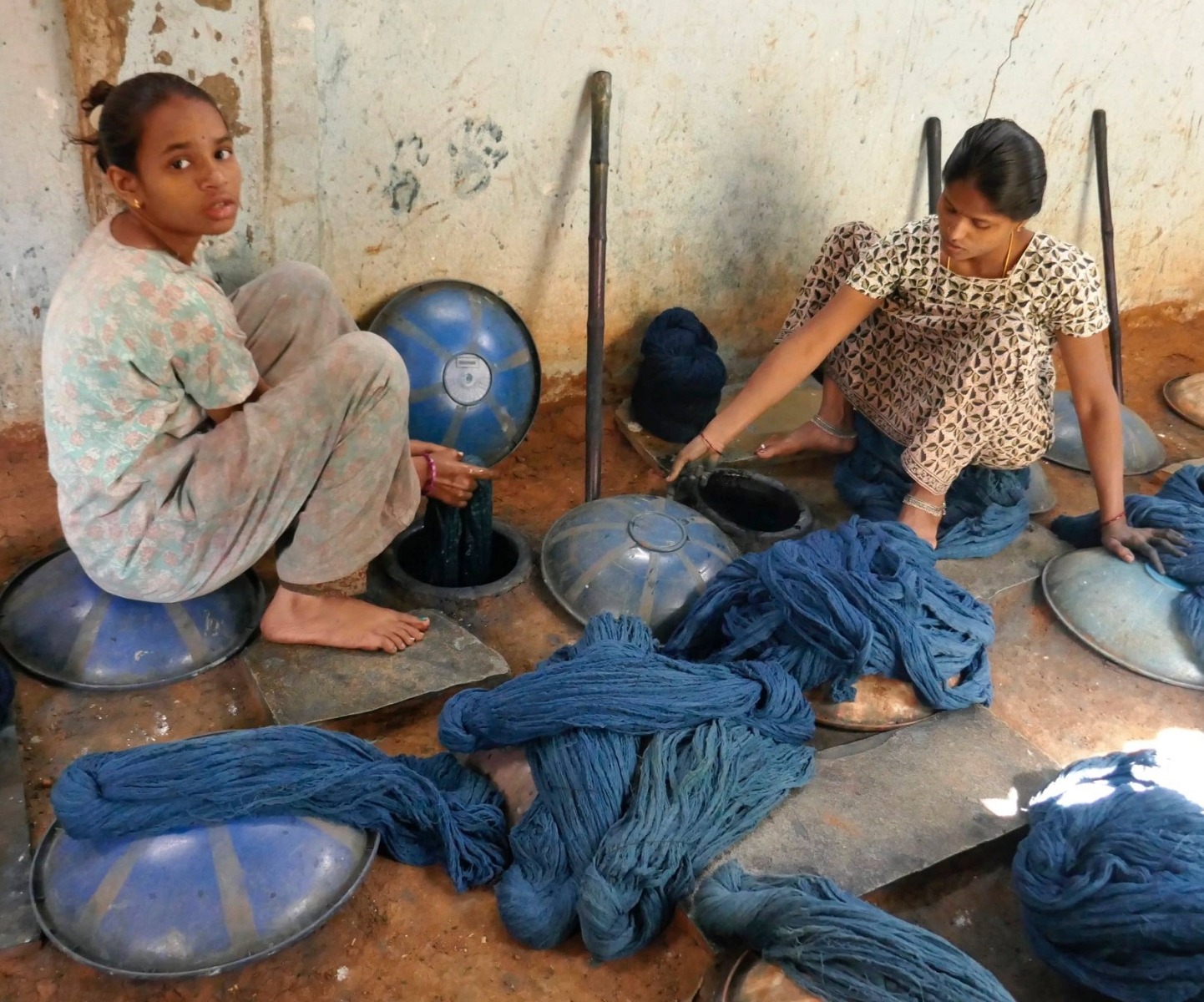
The attractive shade of blue, which is extracted from the leaves of the indigo plant through a process of fermentation, needs no mordant for dyeing. There is something mysterious about the indigo dye, which reveals its colour gradually after the material emerges from the vat. Pre-washed and degummed fabric is soaked in an indigo vat and turned around a few times. When the fabric is pulled out, it is a pale shade of yellow. It needs to be quickly opened and aired. With exposure to air and oxidation, there is a gradual transformation of the colour, which slowly turns muddy green before changing into a lovely shade of indigo blue. The shade depends on the strength of the vat. For a deeper shade, the yarn or fabric needs to be dyed repeatedly till the desired tone is achieved. When processed properly, indigo is the fastest of blues. Natural fibres such as cotton, silk, jute, linen and wool can be dyed in indigo.
view: 0 Categories: General By: Bandhejstore

About the Author

Archana Shah

Archana Shah

Archana Shah graduated from the National Institute of Design (NID) in 1980. Soon after graduating from NID, she travelled to remote corners of the country to study, understand and experience the vast variety of weaving, dyeing, printing, embroidery and ornamentation techniques practised by different communities.

This proved to be a very enriching journey, and the unique skills of the people of various regions, their distinctive colour palettes, and rich design vocabulary became the base for all her future work.

In 1985, Archana started a clothing company, BANDHEJ, a label influenced by the traditional textiles and craft skills, created for Indian women, with a very Indian sensibility. Today, Bandhej is a recognised brand, with a chain of stores in Ahmedabad, Mumbai, Bangalore, Delhi, Kolkata, Pune and Cochin.

Apart from this, she has designed costumes for a few feature films such as Bhavni Bhavai, Mirch Masala, Hun, Hunshi, Hunsilal and costumes for theatre. 1985 – 1997 she also worked on Festival of India inaugurations at Paris, Moscow, Leningrad and Tashkent to design architectural textile installations to create an Indian mood.

More recently she has published a book - SHIFTING SANDS, Kutch: A Land in Transition. The book is a personal journey of discovery and about her association of over 30 years with the land, people and their craft.

view: 0 Categories: General By: Bandhejstore

About the Author

Archana Shah

Archana Shah

Archana Shah graduated from the National Institute of Design (NID) in 1980. Soon after graduating from NID, she travelled to remote corners of the country to study, understand and experience the vast variety of weaving, dyeing, printing, embroidery and ornamentation techniques practised by different communities.

This proved to be a very enriching journey, and the unique skills of the people of various regions, their distinctive colour palettes, and rich design vocabulary became the base for all her future work.

In 1985, Archana started a clothing company, BANDHEJ, a label influenced by the traditional textiles and craft skills, created for Indian women, with a very Indian sensibility. Today, Bandhej is a recognised brand, with a chain of stores in Ahmedabad, Mumbai, Bangalore, Delhi, Kolkata, Pune and Cochin.

Apart from this, she has designed costumes for a few feature films such as Bhavni Bhavai, Mirch Masala, Hun, Hunshi, Hunsilal and costumes for theatre. 1985 – 1997 she also worked on Festival of India inaugurations at Paris, Moscow, Leningrad and Tashkent to design architectural textile installations to create an Indian mood.

More recently she has published a book - SHIFTING SANDS, Kutch: A Land in Transition. The book is a personal journey of discovery and about her association of over 30 years with the land, people and their craft.